
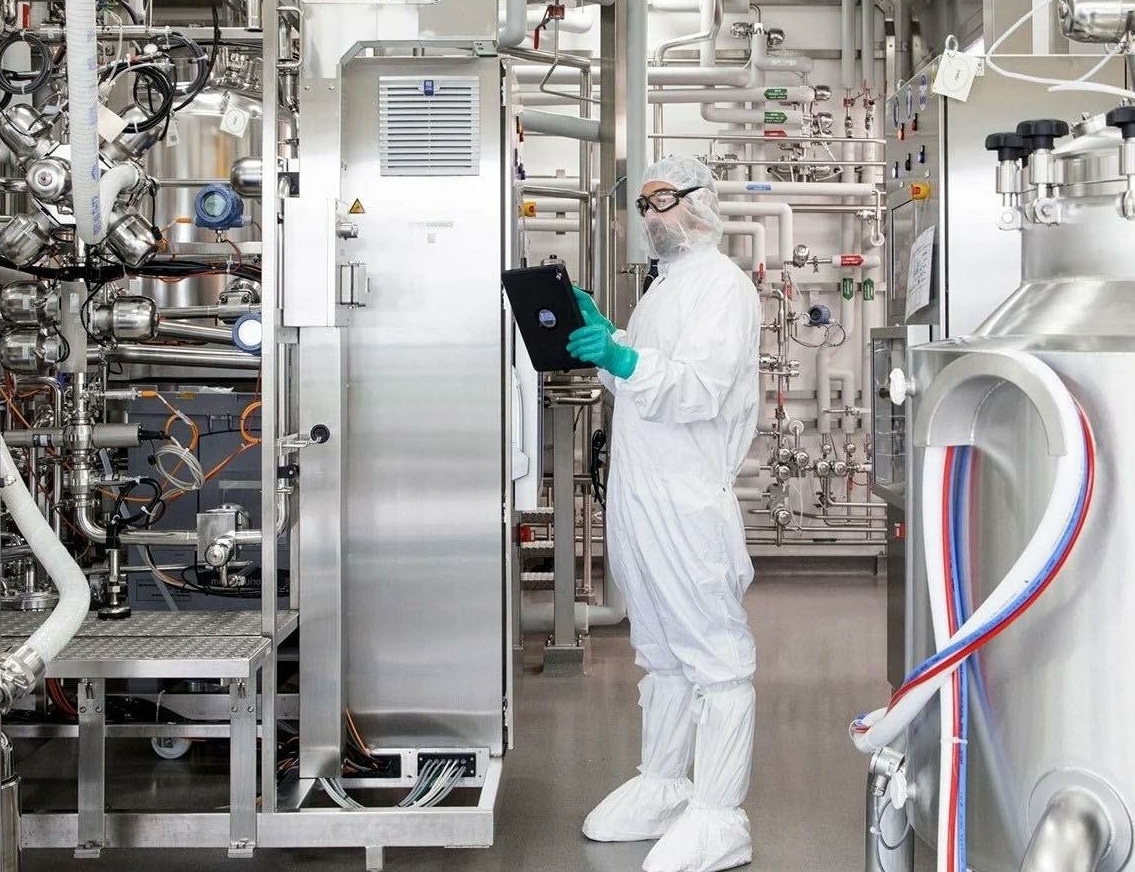
Key takeaway (TL;DR) – In Ireland, a career change into pharmaceutical manufacturing is still a great idea in 2026. The proof comes from industry experts, job adverts and continuing investment. GetReskilled’s Conversion Course into Pharmaceutical Manufacturing will give you all you need and is the quickest way to make that change, no matter what your previous work experience is.
Key facts about pharma careers in Ireland (2026)
- Ireland’s pharma and medical device sector employs over 77,000 people
- There are 213 pharma and medical device factories across Ireland
- Over 6,000 new jobs were announced by the industry between January 2023 and December 2024
- A further 1,100 new jobs announced in 2025 alone
- Entry-level roles are available without prior pharma experience
- GetReskilled’s conversion course takes 10 weeks part-time (or 10 days full-time)
- Over 2,000 people from non-pharma backgrounds have retrained with GetReskilled
- Typical starting salaries for entry-level operators range from €30,000–€38,000 — see our full pharma salary guide
Ireland’s pharma industry in 2026
Ireland’s pharma and medical device manufacturing industries have been booming for years now. They currently employ over 77,000 people across the country.
With numbers like that there’s a decent chance you know someone already working in the industry. If you do, you’ll know that these jobs pay extremely well, come with a host of perks and are stable.
Perhaps you’ve been hearing about these jobs and wishing you could have one too but feel like you’ve missed the boat or left it too late.
Let’s take a closer look at whether a career change into pharma is still a good idea in 2026…
Industry experts tell us you don’t need previous experience
In May 2025, Michael Kavanagh, manufacturing manager at Amgen, was asked by Silicon Republic about crucial skills. He specifically called out a move away from candidates needing industry experience and towards finding candidates with the right mindset…
“In the past, we focused heavily on experience, particularly in aseptic manufacturing. That still matters, but now I’m putting more weight on whether someone is genuinely interested in the work, willing to learn, is coachable and able to follow procedures carefully.
We live by standard operating procedures, so being compliant, having a safety mindset and being willing to speak up when something isn’t right to ensure quality is crucial. Some of our best people came in from different backgrounds but had the right mindset.”
Amgen employs almost 700 people at their manufacturing site in Dublin.
This was similar to what MSD’s Stephen Burke, interim leader of the MSD Ireland recruitment team, told the publication in August 2024 when asked about meeting the evolving demands for skills in the pharma industry…
“We always take an inclusive approach to talent attraction to ensure that we are attracting a diverse pool of professionals across many different disciplines with varied backgrounds at all stages of their career… This includes career opportunities for people coming from traditional pharma backgrounds as well as for anyone coming from beyond pharma, who may not have direct experience but have transferable skills and a passion for making a difference for people and patients.”
MSD employs approximately 3,000 people in six manufacturing sites across five counties (Carlow, Cork, Dublin, Meath and Tipperary).
Job adverts confirm you don’t need previous experience
At the time of originally writing this article, on a random weekday, we took a snapshot look at our dedicated pharma jobs board to see what entry level jobs were available across Ireland.
We found at least a dozen manufacturing jobs where previous experience in the pharma industry wasn’t a necessity.
These opportunities were from locations across the country including in Cork, Dublin, Galway, Limerick and Waterford.
Here are a couple of examples…
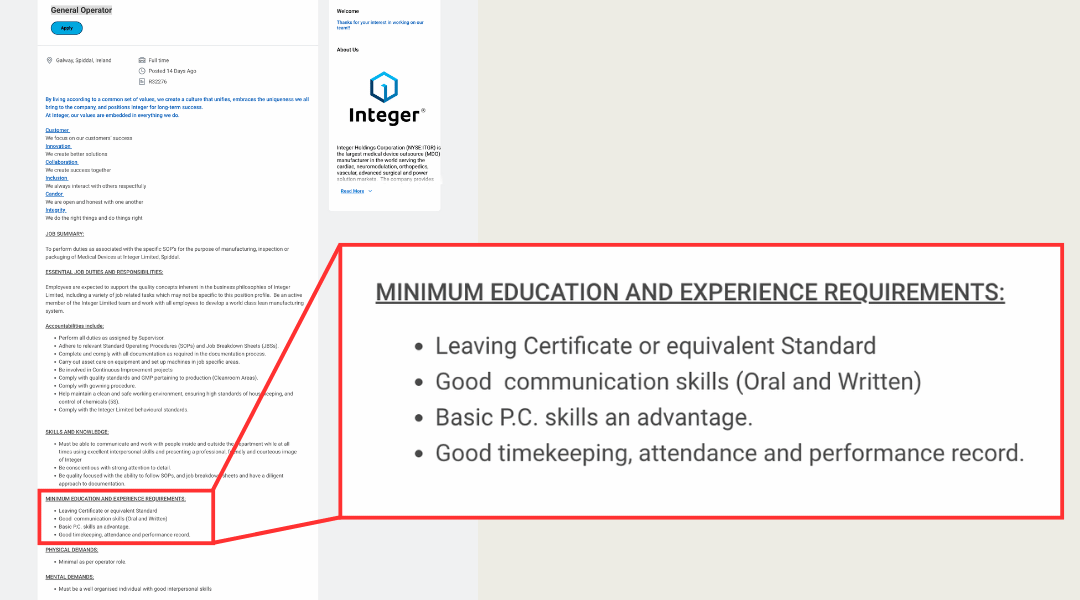
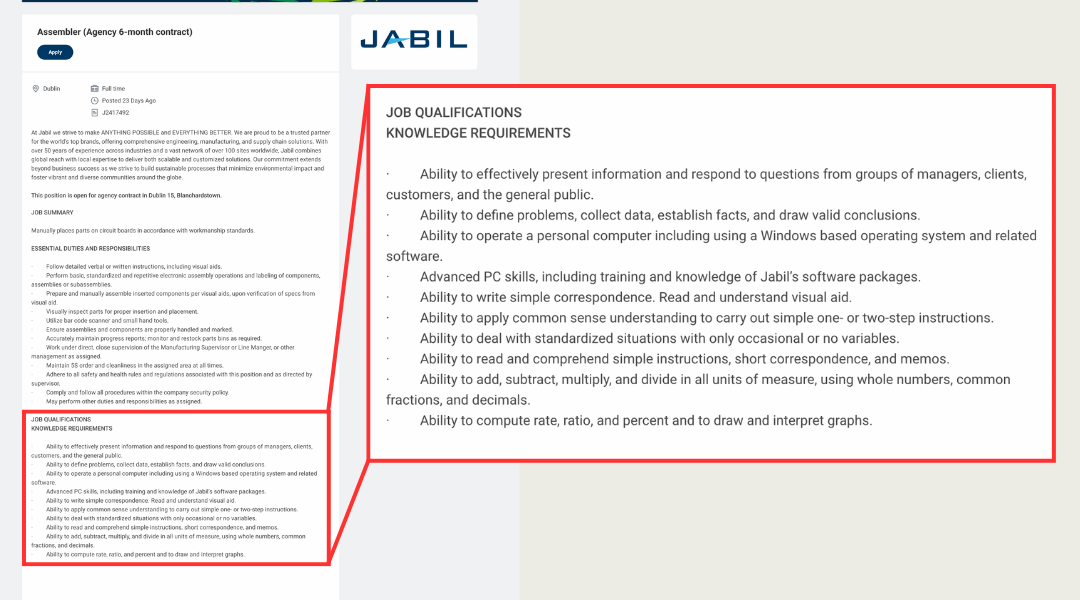
You’ll notice these examples don’t make any mention of previous industry experience.
And here are a few more examples…
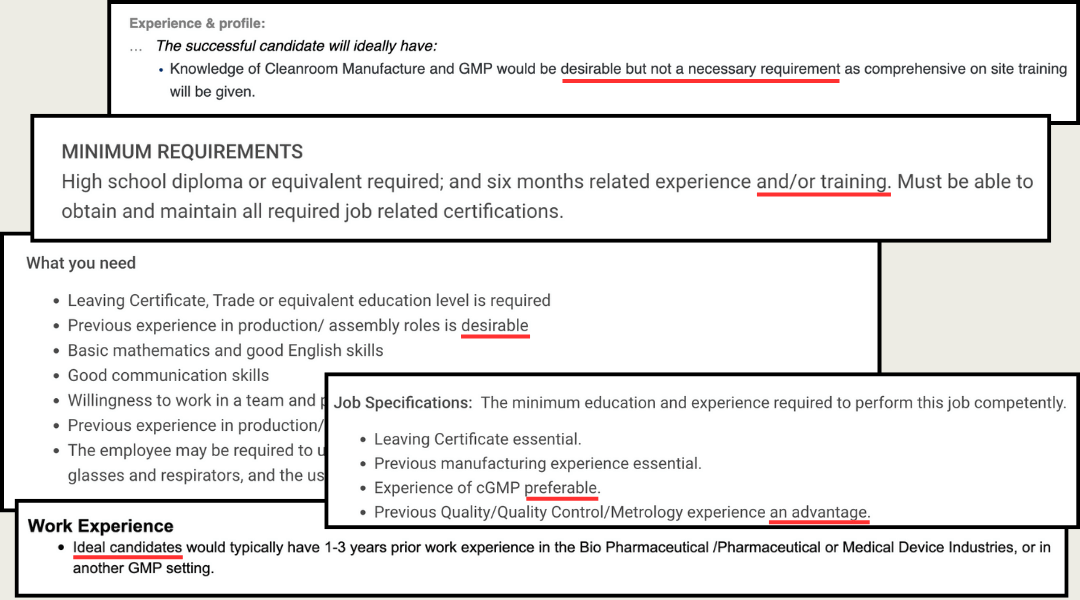
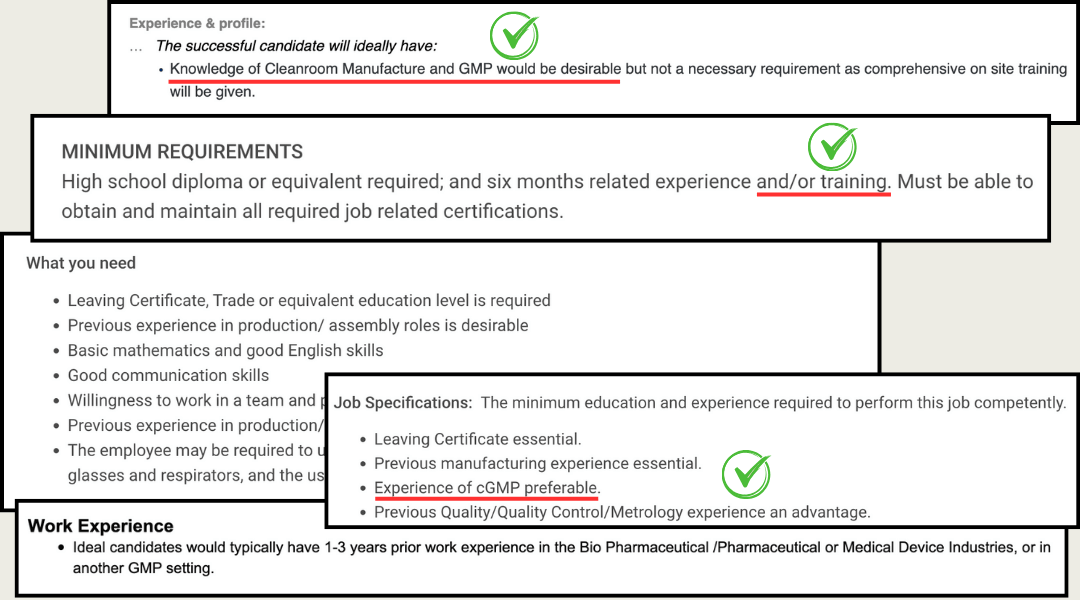
It’s easy to think that these ones require previous pharma experience but phrases like “desirable”, “an advantage” and “ideal” show that employers are absolutely willing to consider candidates without it.
And that’s just to fill the roles that are vacant today. What about the future?…
Companies are continuing to invest & new jobs are being created
In addition to the jobs there currently are in Pharmaceutical and medical device manufacturing companies across Ireland, between January 2023 to December 2024 companies announced the creation of 6,000 more jobs. (Read our full article summarising this data here)
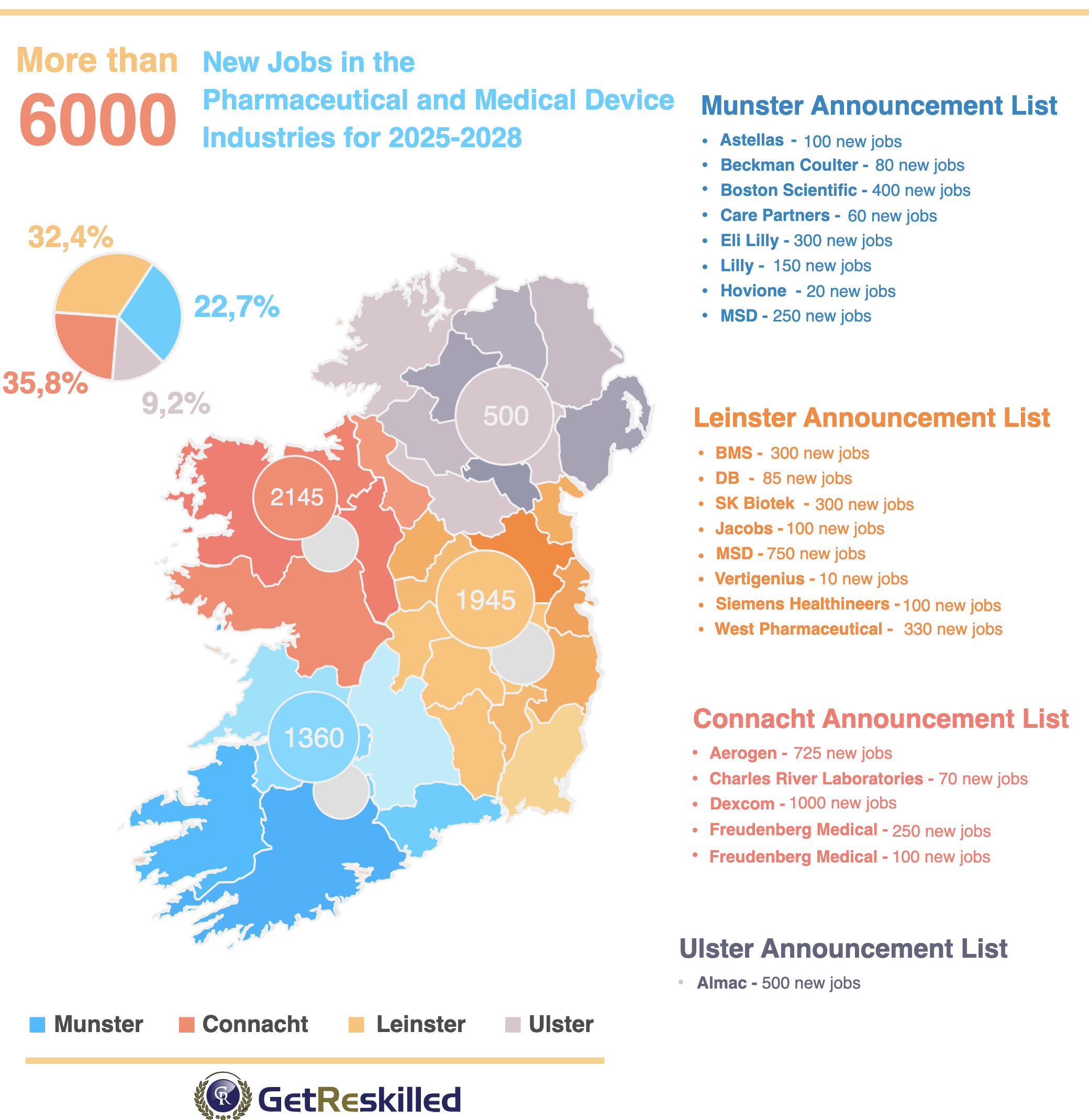
A further 1100 new jobs have been announced by the industry so far in 2025.
With companies already willing to accept applications from candidates without previous experience, the creation of so many more jobs will likely only strengthen that approach.
But is there anything you can do to move the odds further in your favour?
Set yourself apart
When we previously attended the NIBRT “Careers in Biopharma” Event, employers told us that they were looking for candidates with a passion to work in the industry and some initiative to gain the necessary skills.
Companies told us that candidates without experience face a much better chance of impressing them if they enrol in some sort of pharma-based education programme.
We know from our student success rate that people who’ve taken our courses are of interest to employers but it was great to hear it from employers too.
A candidate that has taken that first step themselves shows real drive and motivation to succeed.
So what’s the quickest way you can make this change?
The course that’s right for you
We firmly believe that the quickest way to successfully make a career change into pharma is with our Conversion Course into Pharmaceutical Manufacturing.
This is a 10-week part-time course that is fully online. You are in complete control of your schedule and can study at a time and place that suits you.
The 2 module programme will teach you all you need to get your first job in the industry…
Module 1 – Manufacturing Safe Medicines and Medical Devices (GMP) (Weeks 1-6)
After you complete this module:
- You’ll be able to talk to employers with confidence about the systems and processes used in pharmaceutical and medical device manufacturing and about the rules and regulations that you need to follow.
- You’ll have enough technical knowledge to work in this environment.
- You’ll be able to write reports and reference materials in a manner consistent with the professional norms of this industry.
Module 2 – Advanced Job Hunting For the Pharma Industry (Weeks 7-10)
After you complete this module:
- You’ll know about your local BioPharma/MedTech manufacturing industry and where the jobs are.
- You’ll know which jobs you’d be perfect for and where to find them.
- You’ll be able to assess your own skill set and know how to sell that to employers.
- You’ll know what employers expect from your application and job interview.
- You’ll be able to follow a step-by-step process to find, apply and successfully interview for your first job in this industry.
If we take a look at those previous job adverts, not only would you be meeting their minimum requirements, you start to find yourself meeting some of those “desirable” and “preferable” criteria.
Over 2,000 people from all walks of life have retrained with us and entered this industry.
Past students include:
- Homemakers
- Self-Employed
- Early School Leavers – you don’t need a Leaving Cert or A Levels if you have work experience
- Working Parents – including those with young kids
- Restaurants/Hospitality – Chef, Cook, Restaurant Manager
- Healthcare – Nurse, Healthcare Assistant, Caregiver, etc.
- Manufacturing – Production Operator, Assembler, Packaging, etc.
- Meat Processing – Operator, Butcher, etc.
- Defence Force – Army, Navy, Air Corps
- Construction – Electrician, Carpenter/Joiner, Foreman, General Operative
- Warehouse – All Warehouse Workers
- Sales/Business – Retail Sales, Pharma Sales, Business, etc.
- Other – Farmers, Designers, Beauty/Hair Stylist, etc
You can join them today!
Because, in 2026, a career change into pharma is still a great idea.
For more information, and to sign up and secure 1 of only 5 places on our next course, click on this link to visit the Conversion Course into Pharmaceutical Manufacturing page.
How to change career into pharma in 2026?
1. Check that pharma is a good fit for you
Read through the job examples and requirements in this article. Make sure you’re comfortable with shift work, working in a highly regulated environment, and following detailed procedures.
2. Map your current skills to pharma roles
If you’ve worked in food, electronics, general manufacturing, healthcare, or other process industries, you probably already have valuable experience with machinery, hygiene, safety, or quality. List those skills – we’ll want to highlight them on your CV later.
3. Get the right training
Take a focused online course that covers:
- How medicines and medical devices are made
- Good Manufacturing Practice (GMP)
- Documentation and quality systems
FYI: Our 10‑week online conversion course is designed specifically for people with no previous pharma experience who want to move into an entry‑level manufacturing or technician role.
4. Update your CV and LinkedIn profile
Once you’ve started or completed your course:
- Add a new “Pharmaceutical Manufacturing Training” section and outline the details of the course you have taken.
- Use language from real job adverts in this article so your CV “matches” what employers are asking for.
- Highlight any previous experience with shifts, safety, or regulated environments.
5. Apply for entry‑level pharma roles strategically
Use our dedicated pharma jobs board and other job sites to filter for roles that do not require prior pharma experience. We recommend starting with manufacturing / operator / technician positions – they’re often the most accessible for career changers.
6. Prepare for interviews with GMP basics
Be ready to answer questions about:
- Why you are changing career into pharma now
- What you learned about GMP, documentation, and quality during your course
- How your previous work prepared you to work carefully and follow procedures
7. Plan your progression once you’re in
After 12–24 months in an entry‑level role, you can look at Quality roles (QA, QC) or entry level Validation / CQV / CSV roles. We offer additional upskilling courses in these areas so you can keep progressing. For a detailed plan on how to grow your career in the industry, take a read of our 6 Easy Steps to Planning Your Career for the Pharmaceutical Industry article
FAQ
Q1) Who can retrain for a job in pharmaceutical manufacturing?
The GetReskilled Conversion Course into Pharma Manufacturing has helped people from almost any job or career you can imagine make a career change into pharma manufacturing. With previous work experience you undoubtedly have skills that pharma employers are looking for. As well as giving you technical knowledge, we help you understand what your skills are and how you can talk about them at interview.
Q2) How can a 10-week programme be all I need?
Pharmaceutical companies give their staff detailed training about their particular processes when they hire them so they’re not looking for new staff to know specifics about the job before they start. Instead, they are looking for people who understand that there are very strict regulations that must be followed by all pharmaceutical companies, have a good understanding of what those regulations are, and who demonstrate a patient-first mindset. This is what the Conversion Course into Pharmaceutical Manufacturing teaches you (along with how to actually find a job!)
Q3) What’s the quickest way to retrain for a job in pharmaceutical manufacturing?
GetReskilled’s standard Conversion into Pharmaceutical Manufacturing Course is 10-weeks of part-time study. For those who looking for a faster option while still maintaining the same technical and job hunting content, there is a Fast Track option available. This option takes the standard course content and delivers it full-time across 10 days.
Q4) Can I move into pharma manufacturing in 2026 with no previous pharma experience?
Yes. Our review of current job adverts across Ireland shows many entry‑level manufacturing roles where previous pharma experience is not a requirement. Employers are more focused on your ability to work in a regulated environment, follow procedures, and learn quickly.
People commonly move from sectors such as food manufacturing, electronics, general manufacturing, and other process industries. To make that move successfully, you need to understand pharmaceutical manufacturing basics and Good Manufacturing Practice (GMP) – which is exactly what our online Conversion Course into Pharma Manufacturing is designed to teach.
Q5) Do I need a science degree to work in pharma manufacturing?
Not for many entry‑level roles. A science degree can help for certain positions, but a lot of manufacturing and operator jobs focus more on practical skills, attention to detail, and reliability than on formal scientific qualifications.
If you don’t have a science degree, you can still become a strong candidate by taking a structured online course that covers pharma manufacturing, GMP, and documentation, and by showing you can complete technical training successfully. Our Conversion Course into Pharma Manufacturing (10‑week online) was specifically created for people without a science background.
Q6) How long does it take to retrain into pharma manufacturing?
Most people can get job‑ready in 10–20 weeks of focused study, depending on their starting point and how much time they can commit each week.
For example, our 10‑week online conversion course is designed to give you the core knowledge of pharma manufacturing and GMP that employers look for in entry‑level operators. Some learners then add further modules (e.g. quality or validation topics) if they want to target more specialised roles.
Q7) What kind of jobs can I apply for after retraining?
Typical entry‑level roles after a conversion course include:
- Manufacturing / Production Operator
- Process Technician
- Packaging / Filling Operator
- Cleanroom Operator
With further experience and possibly additional training, people often progress into areas such as Quality Assurance (QA), Validation / CQV, or technical support roles.
In our courses we explain what each of these roles involves and how your existing skills can transfer, so you can target the jobs that fit you best.
Q8) How much can I expect to earn in entry‑level pharma roles?
Pharma and medical device manufacturing roles in Ireland typically pay around 25% above average manufacturing salaries. Exact figures depend on location, company, shift pattern, and your previous experience.
In the article above we share example job adverts so you can see real salary ranges and benefits. During our courses, we also give guidance on how to position your CV to access the higher‑paying roles that match your skills.
Q9) Am I too old to change career into pharma?
In our experience, age is not a barrier as long as you can meet the physical and shift requirements of the role. Many of our learners are in their 30s, 40s or 50s and are successfully changing from other industries into pharma and medical device manufacturing.
What employers really value is reliability, maturity, and the commitment to retrain. Completing an online course while working is a very practical way to demonstrate that.
Q10) What’s the best way to start if I’m interested?
A simple route is:
- Read guides like this to confirm pharma is a good fit for you.
- Take a structured online conversion course to learn pharma manufacturing and GMP.
- Use a dedicated pharma jobs board to find suitable entry‑level roles and tailor your CV.
If you’re not sure which course fits your background, you can use our Personalised Course Recommendation tool or speak with us directly via live chat.
Q11) What is GMP and why does it matter for getting a pharma job?
GMP stands for Good Manufacturing Practice — the set of regulations that govern how medicines and medical devices are produced to ensure they are safe and effective. Every person working on a pharma manufacturing floor is required to understand and follow GMP. Demonstrating that you already understand GMP before you apply for a job is one of the most effective ways to stand out as a candidate without previous industry experience.
Q12) What salary can I expect in an entry-level pharma job in Ireland?
Entry-level pharmaceutical manufacturing operator roles in Ireland typically pay between €30,000 and €38,000 per year, with many roles also offering shift allowances, bonuses, and benefits packages that can add significantly to that figure. Salaries increase with experience and further qualifications. See our full pharma salary guide for a breakdown by role and level.
Q13) Which counties in Ireland have the most pharma jobs?
Cork, Dublin, Galway, Limerick, and Waterford have the highest concentrations of pharmaceutical and medical device manufacturing sites, but there are factories in almost every county in Ireland. GetReskilled maintains a full list of 213 pharma factories by county so you can see exactly what’s available near you.
Q14) How long does it typically take to get a job after completing the course?
This varies depending on the individual, location, and the job market at the time, but many GetReskilled graduates secure their first pharma role within 3 to 6 months of completing the course. The job hunting module of the course is specifically designed to accelerate this process by teaching you exactly how to find roles, tailor your application, and perform well at interview in this industry. See our student success stories for real examples.
Q15) Is pharma a stable industry to work in?
Yes — pharmaceutical and medical device manufacturing is widely regarded as one of the most recession-resistant industries in Ireland. Demand for medicines does not follow economic cycles in the way that other industries do, and Ireland’s position as a global hub for major pharma multinationals has been built up over decades. The continued stream of investment announcements and job creation confirms the industry’s long-term stability.
About the Author

Claire Wilson
Content Marketing and Career Coaching
Claire runs GetReskilled’s Advanced Career Coaching Programme – our specially devised job hunting course that helps our trainees take that final step into employment by leading them through the job hunting process. She is extremely enthusiastic about helping people reach their final goal of employment in their new career path.
Claire has a BSc (Hons) in Medical Biology from Edinburgh University and spent 7 years working in the pharmaceutical and medical device industries.
Post Your Comments Below